

The ISA Family Explained: The Different Types and Who Each Is For
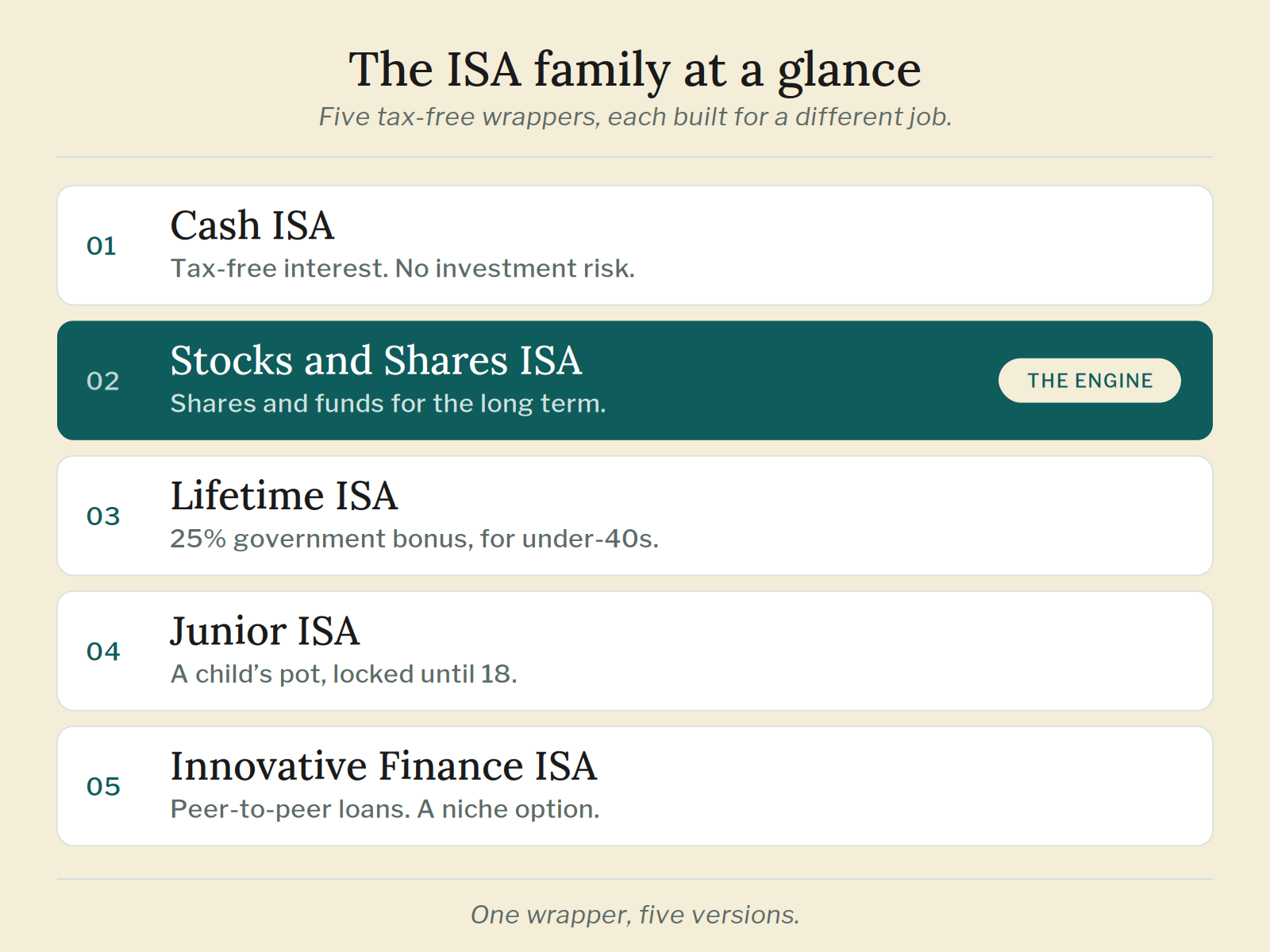
There are five types of ISA in the UK: the Cash ISA, the Stocks and Shares ISA, the Lifetime ISA, the Junior ISA and the Innovative Finance ISA. All five are tax-free wrappers, so nothing earned inside them is taxed, and all but the Junior ISA share one £20,000 yearly allowance. What changes is what each one holds and who it is for: cash for money you need soon, stocks and shares for long-term growth, the Lifetime ISA for a first home or later life, the Junior ISA for a child, and the Innovative Finance ISA for peer-to-peer lending.
ISA is a family name, not a single product, and most of the confusion comes from picturing one account when there are five. Here is the whole family on one page, and by the end you will know which ones are worth your attention.
The five ISAs at a glance
| ISA | What it holds | Yearly limit | Best for |
|---|---|---|---|
| Cash ISA | Cash, earning interest | Up to £20,000 (£12,000 for under-65s from 6 April 2027) | Money you may need soon, an emergency fund |
| Stocks and Shares ISA | Shares, funds and bonds | Up to £20,000 | Long-term growth |
| Lifetime ISA | Cash or investments, plus a 25% government bonus | £4,000, within the £20,000; open between 18 and 39 | A first home up to £450,000, or later life from 60 |
| Junior ISA | Cash or investments for a child | £9,000, separate from your £20,000 | A child under 18; locked until they turn 18 |
| Innovative Finance ISA | Peer-to-peer loans | Up to £20,000 | A niche, higher-risk option most people leave aside |
The wrapper is the whole point. Tax is the single biggest drag on building wealth over a lifetime. Normally, when your money earns interest, pays dividends or grows in value, a slice of that goes to HMRC. Inside an ISA, none of it does. No tax on the interest, no tax on the dividends, no capital gains tax, nothing to report. That is what people mean by a tax-free wrapper: think of it as a protective shell around your money, and everything that grows inside the shell stays yours. It even matters when you die: a husband, wife or civil partner can inherit the tax-free benefit, as I explain in what happens to your ISA when you die.
One wrapper, five versions
You have just met the thing they all share: that tax-free wrapper. What changes from one ISA to the next is what you are allowed to put inside and who it is designed for.
They also share one allowance. At the time of writing, you can pay up to £20,000 a year across your ISAs in total. This only counts new money going in: the allowance is the most you can put into your ISAs in any given tax year, which runs from 6 April to 5 April. With most ISAs, taking money out does not give that room back, though some, called flexible ISAs, do let you replace it within the same tax year. It is use it or lose it, and you cannot go over the limit across the whole family of ISAs. The figure is set by the government and can change, so check the current number at gov.uk. The Junior ISA is the one exception, and it sits outside that £20,000, which I will come to.
1. The Cash ISA
A tax-free savings account. Your money earns interest, it does not fall in value, and that interest is free of tax. It is the right home for money you might need soon and an emergency fund you cannot afford to see drop. One change worth flagging: from April 2027, if you are under 65, the most you can put into a cash ISA each year falls to £12,000, though over-65s keep the full £20,000.
2. The Stocks and Shares ISA
The investing one, and the engine of long-term wealth building. It holds investments like shares, funds and bonds, and the value rises and falls. You take that risk in exchange for the chance of growth that cash will rarely match over many years. This is the one I dig into properly in What is a Stocks and Shares ISA.
3. The Lifetime ISA
Built for a first home or later life. You can open one between 18 and 39, and the government adds a 25% bonus on up to £4,000 a year, so up to £1,000 of free money annually. The catch is real: withdraw for anything other than a first home up to £450,000, from age 60, or if you are terminally ill, and you pay a 25% charge that takes back the bonus and a slice of your own money too. It is also being replaced by a new product, which I cover in The Lifetime ISA Explained, though no start date has been set yet.
4. The Junior ISA
A tax-free pot for a child under 18, with its own £9,000 a year allowance that sits entirely separate from your own £20,000. The money is locked away until the child turns 18, which gives it years to grow. More in The Junior ISA.
5. The Innovative Finance ISA
This one holds peer-to-peer loans rather than shares or cash. It carries a different and often higher kind of risk, and for most ordinary investors it is a niche product you can comfortably leave to one side. I am mentioning it for completeness more than anything.
Which ones actually matter for most people
I cannot tell you which is right for you, and this is not advice. But for most working people building wealth over time, the picture usually comes down to a few of them. The stocks and shares ISA tends to be the engine. The cash ISA is the safety buffer for money you need soon. The Lifetime ISA is worth understanding if you are under 40 and saving for a first home. The Junior ISA matters if you have children. The innovative finance ISA, most people never touch.
How many ISAs can I have?
As many as you like in total, and since April 2024 you can even pay into more than one of the same type in a single tax year, as long as your combined contributions stay within the £20,000 allowance.
Does the £20,000 cover all of them?
Yes, across cash, stocks and shares, innovative finance and the Lifetime ISA combined. The Junior ISA is separate, with its own £9,000.
Can I pay into more than one type in a year?
Yes. You can split your allowance across different ISA types in the same year however you like, within the limits for each.
Do I have to use the whole allowance?
No. You can pay in as little or as much as you like up to the limit. Anything you do not use is lost when the tax year ends, as it does not roll over.
Is there such a thing as a family ISA?
No product is called that. Each adult has their own £20,000 allowance, so a couple can shelter up to £40,000 a year between them, and each child can have a Junior ISA with its own £9,000. Some providers use “family” in their brand names, but the accounts underneath are the same five types.
Which type of ISA is best?
There is no single best one. It depends on what the money is for and when you will need it: cash for the short term, stocks and shares for money you can leave for years, and a Lifetime ISA only if you are under 40 and saving for a first home or later life.
Key takeaways
All figures are correct at the time of writing and can change, so always check gov.uk for the current numbers. The value of investments can go up and down, and you can get back less than you put in. This is general information, not financial advice. If you are unsure, speak to a regulated financial adviser.