

The Lifetime ISA Explained
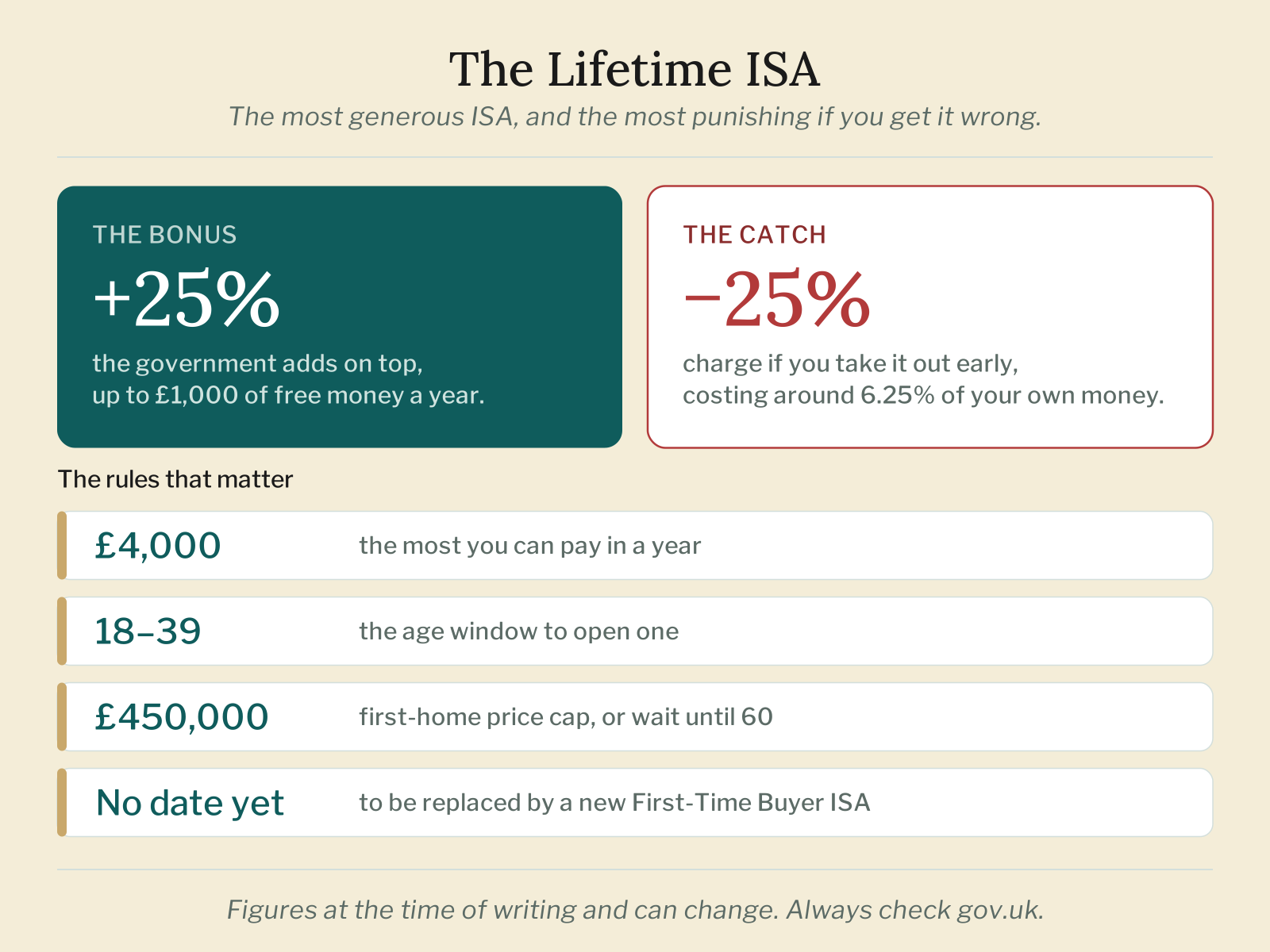
A Lifetime ISA is a tax-free account for a first home or later life, and the government adds 25% to what you pay in. You can pay in up to £4,000 each tax year, which earns a bonus of up to £1,000. You must make your first payment before you turn 40, you can keep paying in until 50, and the money is penalty-free only for a first home costing £450,000 or less, from age 60, or if you are terminally ill. Take it out for anything else and a 25% charge leaves you with less than you paid in.
It is the most generous ISA going, and the most punishing if you get it wrong. The gap between the two is knowing the rules, so here they are.
The Lifetime ISA rules at a glance
| Rule | At the time of writing |
|---|---|
| Who can open one | 18 to 39: your first payment must be before your 40th birthday |
| Most you can pay in | £4,000 each tax year, until you turn 50 |
| Government bonus | 25%, up to £1,000 a year |
| Part of your £20,000 ISA allowance? | Yes, not on top of it |
| Penalty-free uses | A first home costing up to £450,000 (first payment at least 12 months before you buy), age 60 or over, or terminal illness |
| Any other withdrawal | A 25% charge, costing around 6.25% of your own money |
| What is next | Being replaced by a First-Time Buyer ISA, with no start date set yet; existing holders can keep paying in under the current rules |
Here is how the Lifetime ISA works: who can open one, the 25% bonus, what you can use it for, the penalty that catches people out, and the big change on the way.
The headline: a 25% government bonus
You can pay up to £4,000 a year into a Lifetime ISA, and the government adds a 25% bonus on top, so up to £1,000 of free money each year. At the time of writing those figures are set by the government and can change, so check gov.uk. That £4,000 counts as part of your overall £20,000 ISA allowance, not on top of it. To see what the bonus could add up to by 50, and what an early withdrawal would cost, use the Lifetime ISA calculator.
Who can open one, and the age trap
You can only open a Lifetime ISA between the ages of 18 and 39. Once you have one, you can keep paying in, and keep getting the bonus, until you turn 50. But if you do not open one before your 40th birthday, the door closes for good. That age window is the single most important thing to know if a Lifetime ISA might suit you.
What you can use it for without penalty
There are two clean ways to use the money. The first is buying your first home, as long as it costs £450,000 or less. The second is taking it out from age 60 onwards, for later life. There is also a third: if you are terminally ill, with less than 12 months to live. Use it for any of those and the bonus is yours to keep.
The catch that costs people money
Withdraw for any other reason, and you pay a 25% government charge on the amount you take out. Because that 25% applies to your money and the bonus together, it does not just cancel the bonus, it takes a slice of your own savings too, around 6.25% of what you put in. Put simply, you can get back less than you paid in. There is also a 12-month rule: to use the money for a first home without the charge, your first payment must have been made at least 12 months before you buy. Treat a Lifetime ISA as money you are committing to a first home or to age 60, not as a flexible pot.
Cash or investments
Like other ISAs, a Lifetime ISA comes in a cash version and a stocks and shares version. If you choose the invested version, the value can rise and fall like any investment. For a house deposit you might need within a few years, that risk matters, so many people use cash for short timelines and investments for longer ones.
The big change: the Lifetime ISA is being replaced
In the November 2025 Budget the government announced that the Lifetime ISA will be replaced by a new First-Time Buyer ISA. No start date has been set: the government says only that it wants the new account available as soon as practically possible. Existing holders can keep contributing under the current rules, so nothing is being taken away from anyone who already has one. The replacement is expected to focus on home buying and may scrap the withdrawal penalty. The government consultation on its design closed on 18 August 2026, and the response has not been published at the time of writing. If a Lifetime ISA suits your plans, you can still open one now and benefit from the current rules. As with everything here, the detail can change, so check gov.uk.
How much free money can I get?
Up to £1,000 a year, a 25% bonus on contributions of up to £4,000, at the time of writing.
Can I use it for any house?
It is for a first home costing £450,000 or less. Above that cap, or for a property you are not buying as a first-time buyer, the penalty applies.
What happens if I withdraw for something else?
You pay a 25% charge, which takes back the bonus and around 6.25% of your own money, so you can get back less than you put in.
Is it being scrapped?
It is being replaced by a new First-Time Buyer ISA, with no start date set yet. Existing holders can keep paying in under the current rules.
Is the £4,000 per tax year or calendar year?
Per tax year, 6 April to 5 April, the same as the rest of your ISA allowance. Anything unused does not roll over.
Can I pay more than £4,000 into a Lifetime ISA?
Not into the Lifetime ISA itself. The rest of your £20,000 allowance, up to £16,000, can go into other ISAs in the same tax year.
When is the bonus paid?
Your provider claims it from the government in monthly cycles, so it is added through the year as you pay in, not in one lump at the end.
Key takeaways
All figures are correct at the time of writing and can change, so always check gov.uk for the current numbers. The value of investments can go up and down, and you can get back less than you put in. This is general information, not financial advice. If you are unsure, speak to a regulated financial adviser.