

ISA Millionaires: How Many There Are, and How They Got There
If you’ve wondered whether anyone really turns an ISA into a million pounds, they do, and HMRC has counted them. At the last official count, 5,070 people had ISAs worth £1 million or more. Not one of them got there in cash, and for most of them the bulk of the million is growth rather than money they paid in.
How they got there is more ordinary than the headline suggests, and most of it is open to anyone with time on their side. One note before the numbers: the name of this site is the destination I write about, not a description of my own balance.
How many ISA millionaires are there in the UK?
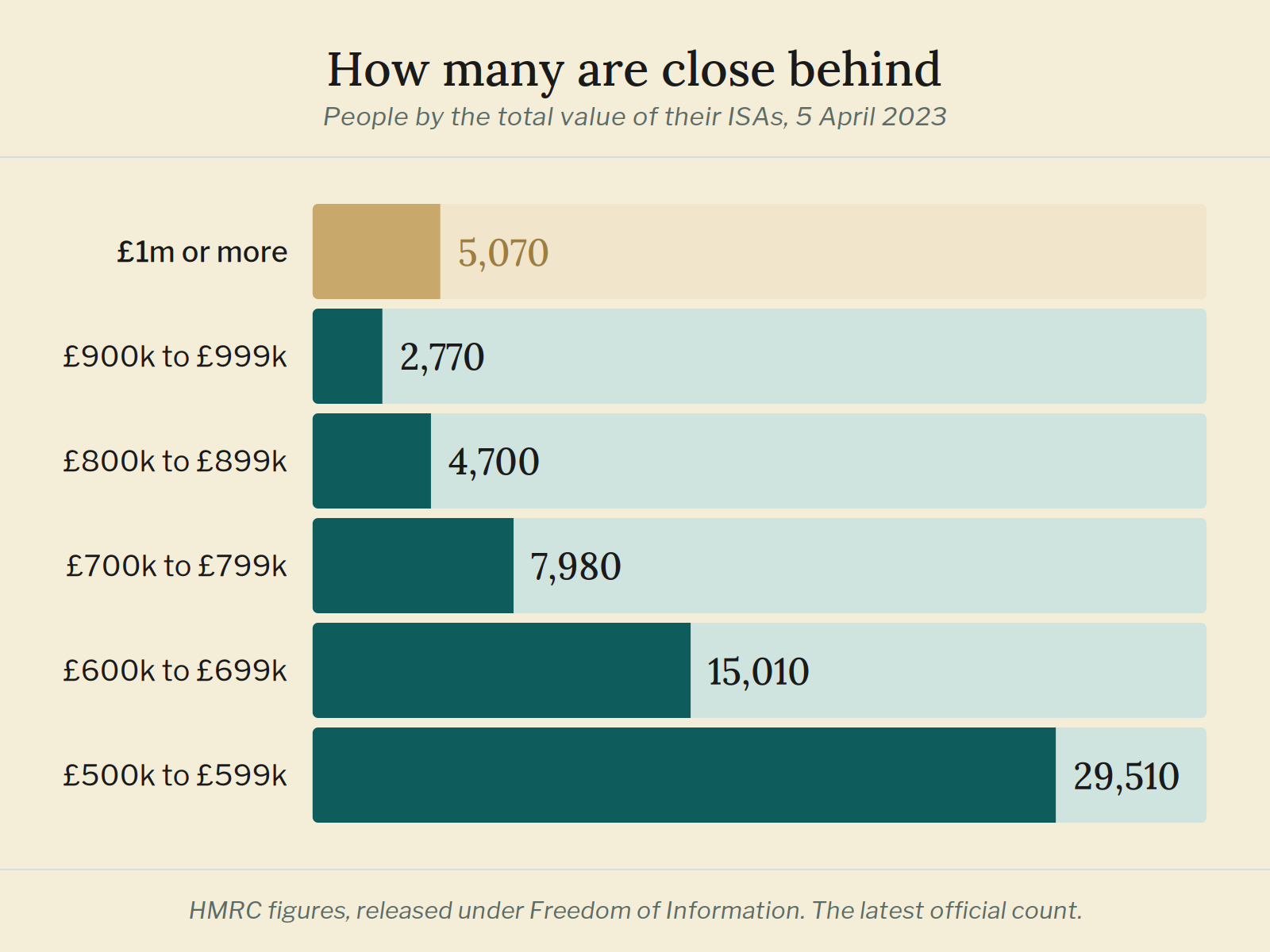
HMRC’s figures, released in answer to Freedom of Information requests, put the number at 5,070 on 5 April 2023, up from 4,850 a year earlier. That’s the latest official count. HMRC doesn’t publish the £1 million band in its regular statistics, so each new figure arrives when someone asks for it, and it arrives a couple of years behind.
For scale, 21.3 million people held an ISA that year. ISA millionaires were roughly one in every 4,200 of them.
The count is also out of date in one direction. Markets have risen since April 2023, and the same figures show another 2,770 people sitting between £900,000 and £999,999 on that date. Plenty of them will have crossed the line since. Rathbones has estimated the total could have reached about 17,600 by April 2026, but that’s a projection built on assumptions about growth and contributions, not a count.
The group behind them is much bigger
Below the millionaires sit almost 60,000 people with between £500,000 and £1 million in their ISAs. That’s the part of the data I find most telling. A seven-figure ISA is the far end of a long and surprisingly busy road.
How did ISA millionaires actually get there?
HMRC’s data can’t tell you what anyone bought. It can tell you what kind of account they used and how much they could have paid in, and those two facts say a lot.
None of them did it in cash
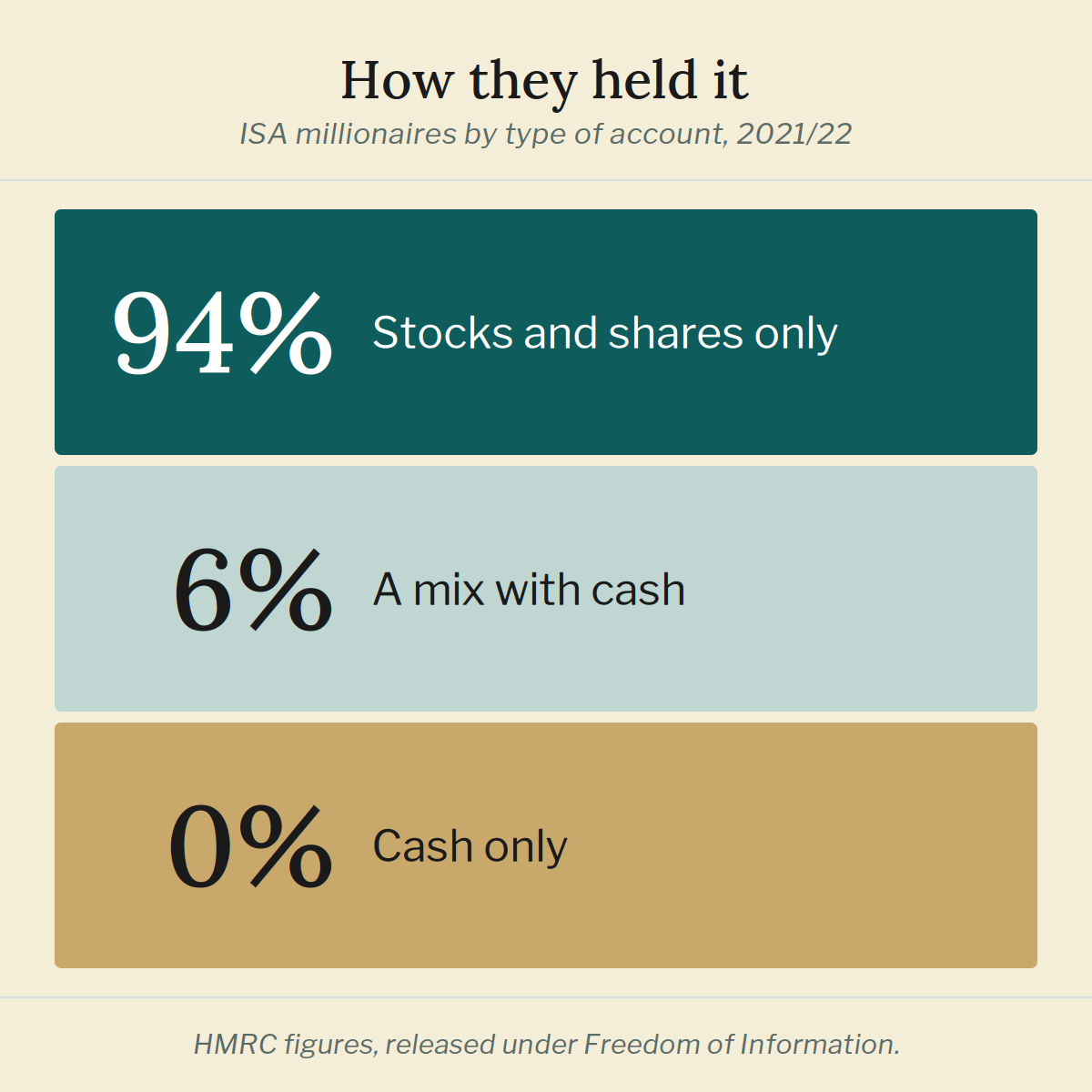
An earlier release, for 2021/22, broke the 4,850 millionaires down by account type. 94% held only stocks and shares ISAs. The other 6% held a mix of stocks and shares and cash. The number who got there with cash ISAs alone was zero.
That’s what you’d expect. Cash has to beat inflation before it grows in real terms, and over long periods it seldom manages much more. Shares have done far better over the long run, with bigger swings along the way, which is the trade I set out in cash ISA vs stocks and shares ISA.
Most of the million isn’t money they paid in
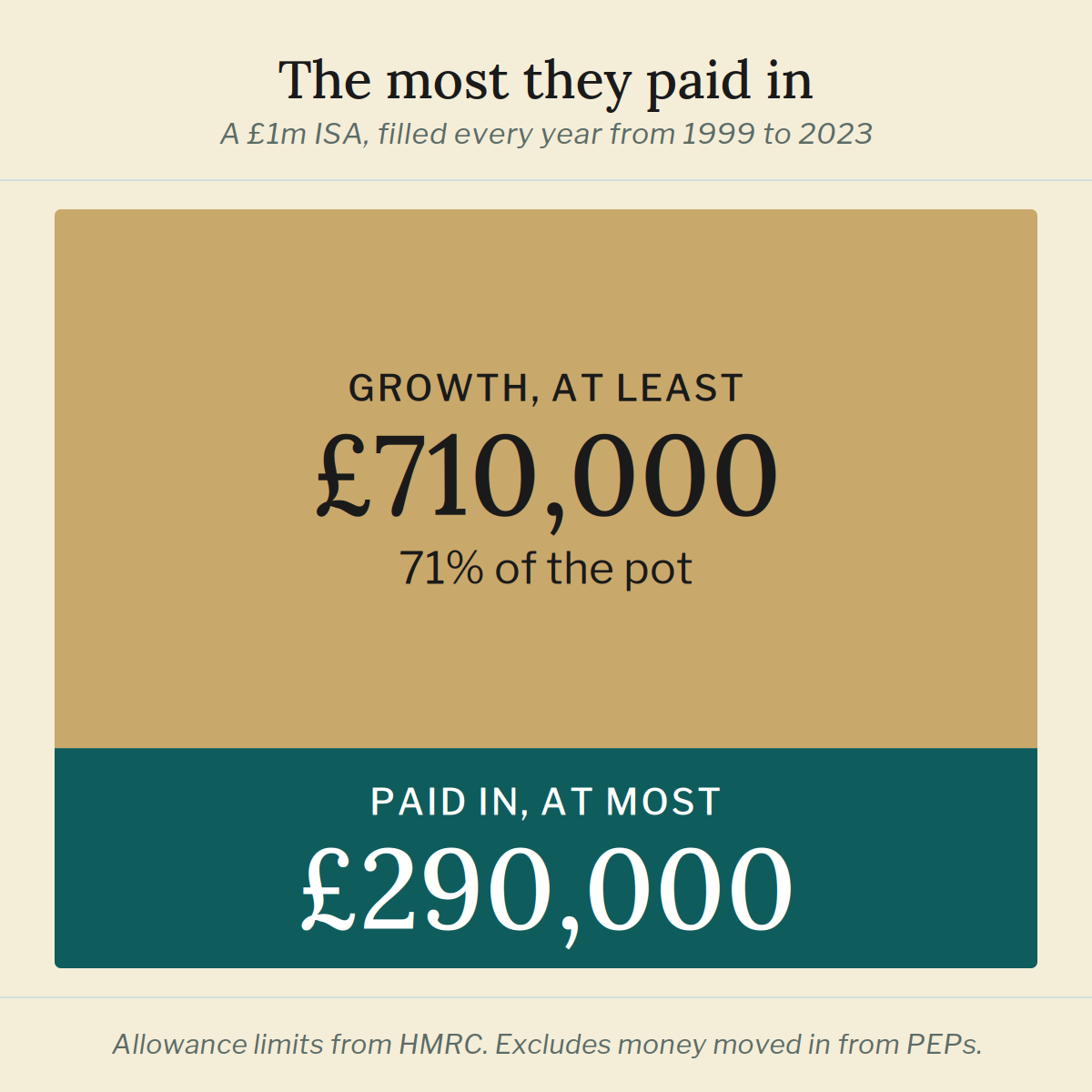
ISAs began on 6 April 1999 with a £7,000 allowance, and it didn’t reach £20,000 until 2017. Add up the maximum for every tax year from the start to April 2023 and it comes to just under £290,000. So even someone who filled the allowance every single year had paid in less than 30% of a million. The rest came from compound returns: returns earning returns, year after year, on a balance that kept getting bigger.
Many of them had a head start
Before ISAs there were PEPs, personal equity plans, which sheltered shares in much the same way from the late 1980s. PEPs were folded into stocks and shares ISAs in April 2008, so anyone who started with one carries a decade more compounding than someone who began in 1999. It helps explain why the group is older than you might guess. Hargreaves Lansdown, which had more than 1,300 ISA millionaires among its own clients at the end of 2024, put their median age at 72.
They left it alone
The same provider’s description of those clients is unglamorous. More than two thirds had already paid into their ISA for the tax year by the end of December, they bought and held rather than traded, and they spread their money across sectors and countries. Around half held a mix of funds and individual shares, about a third held mainly funds, and a smaller group mainly shares. There’s no single route.
What they share is time, and the nerve to sit through the falls. Selling in a downturn is how most people talk themselves off the road, and it’s the behaviour gap at work.
What it means if you’re starting now
The allowance is £20,000 in 2026/27, almost three times the £7,000 the first ISA savers could put in. That makes the route wider than it was. It doesn’t make it shorter. Even filling the full allowance every year, a million is a matter of decades, not years. How long it takes at today’s allowance, and at smaller monthly amounts, is what I work through in what it actually takes to reach £1 million.
If you’d like the whole method in one place, that’s what my book is for. And if you’re at the very start, my free ISA Starter guide covers the essentials in about ten minutes.
What is an ISA millionaire?
Someone whose ISAs are worth £1 million or more in total. It’s the value that counts, not what they paid in, and the million is often spread across more than one account.
How many ISA millionaires are there in the UK?
5,070 at 5 April 2023, on HMRC figures released under Freedom of Information. That’s the latest official count, and the number today is very likely higher.
Can you become an ISA millionaire with a cash ISA?
Nobody has, on HMRC’s figures. In 2021/22, 94% of ISA millionaires held only stocks and shares ISAs and the rest held a mix. None got there with cash alone.
How long does it take to become an ISA millionaire?
Usually decades. At an illustrative 7% a year, filling the £20,000 allowance every year takes about 22 years, and £1,000 a month takes about 28. That’s illustrative, not a forecast.
Do I need to pick individual shares?
No. ISA millionaires include people who hold mainly funds, mainly shares and a mix of both. Steady contributions, time and staying invested matter more than the route.
Is there a limit on how big an ISA can grow?
No. The limit is on what you pay in each tax year, not on what the account is worth. Growth inside an ISA is free of income tax and capital gains tax however large it gets.
Figures and rules change, so check gov.uk for the current position.
Key takeaways
All figures are correct at the time of writing and can change, so always check gov.uk for the current numbers. The value of investments can go up and down, and you can get back less than you put in. This is general information, not financial advice. If you are unsure, speak to a regulated financial adviser.