

What It Actually Takes to Reach £1 Million
Reaching £1 million in an ISA is realistic, but it’s a long game, not a clever trick. At an illustrative 7% a year, £1,000 a month gets there in about 28 years; maxing the full £20,000 allowance gets there in about 22. The uncomfortable, freeing truth underneath both is that most of that million isn’t money you save. It’s compound growth doing the heavy lifting, which is why time matters even more than the amount.
So this isn’t a piece about picking the one fund that rockets. It’s about the two things that actually decide whether you get there: how much you put in, and how long you leave it alone.
The honest numbers.
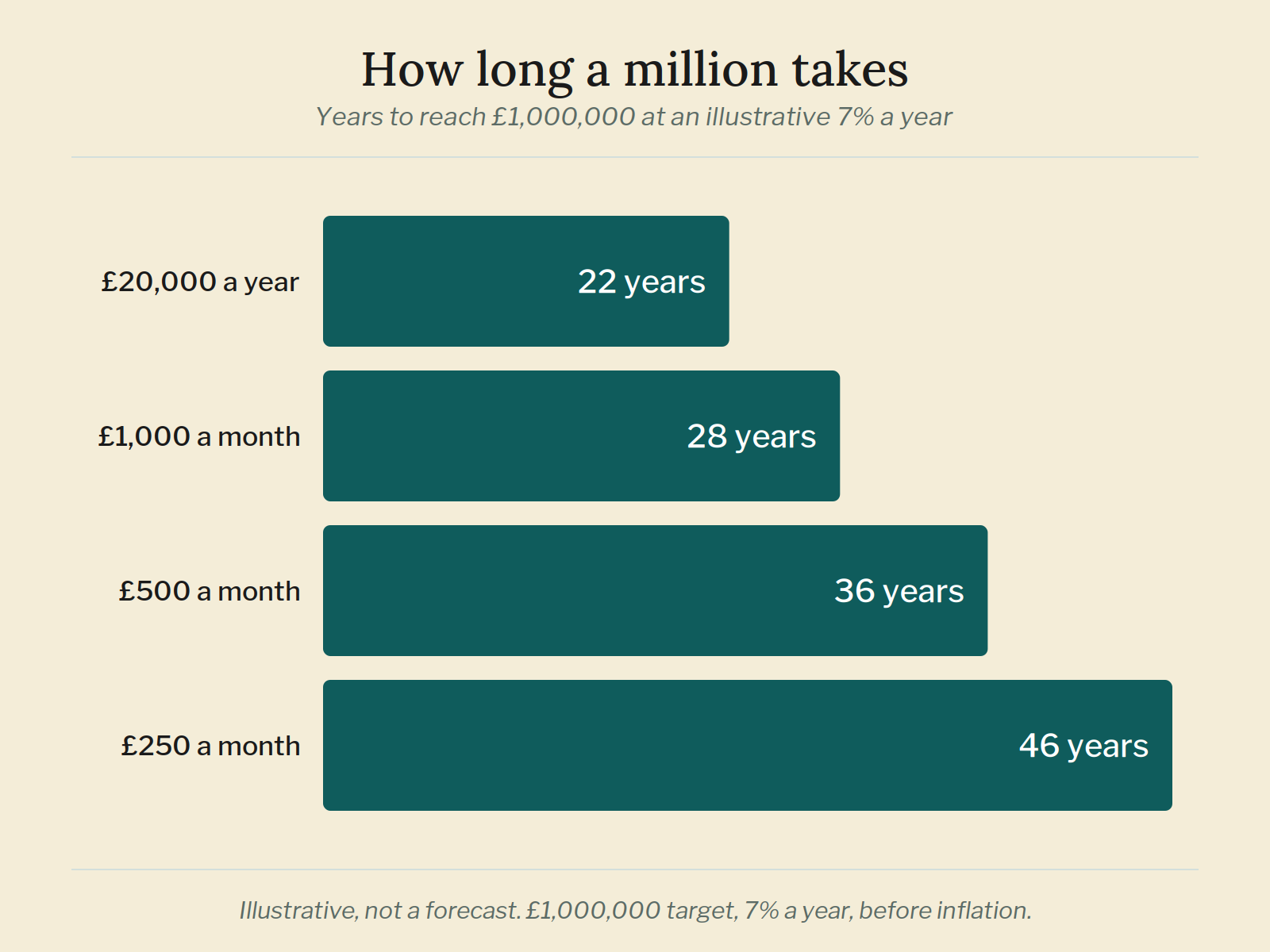
Here’s roughly how long £1 million takes at an illustrative 7% a year (illustrative, not a forecast, and before inflation):
£20,000 a year, the full allowance (about £1,667 a month)
Around 22 years.
£1,000 a month
Around 28 years.
£500 a month
Around 36 years.
£250 a month
Around 46 years.
Drop the return to 5% and each of those stretches by several years; that’s the point of the exercise, not a promise of either number. What stays true across all of them is the shape: the further out you look, the more of the total is growth rather than contributions.
Why most of the million isn’t yours to save
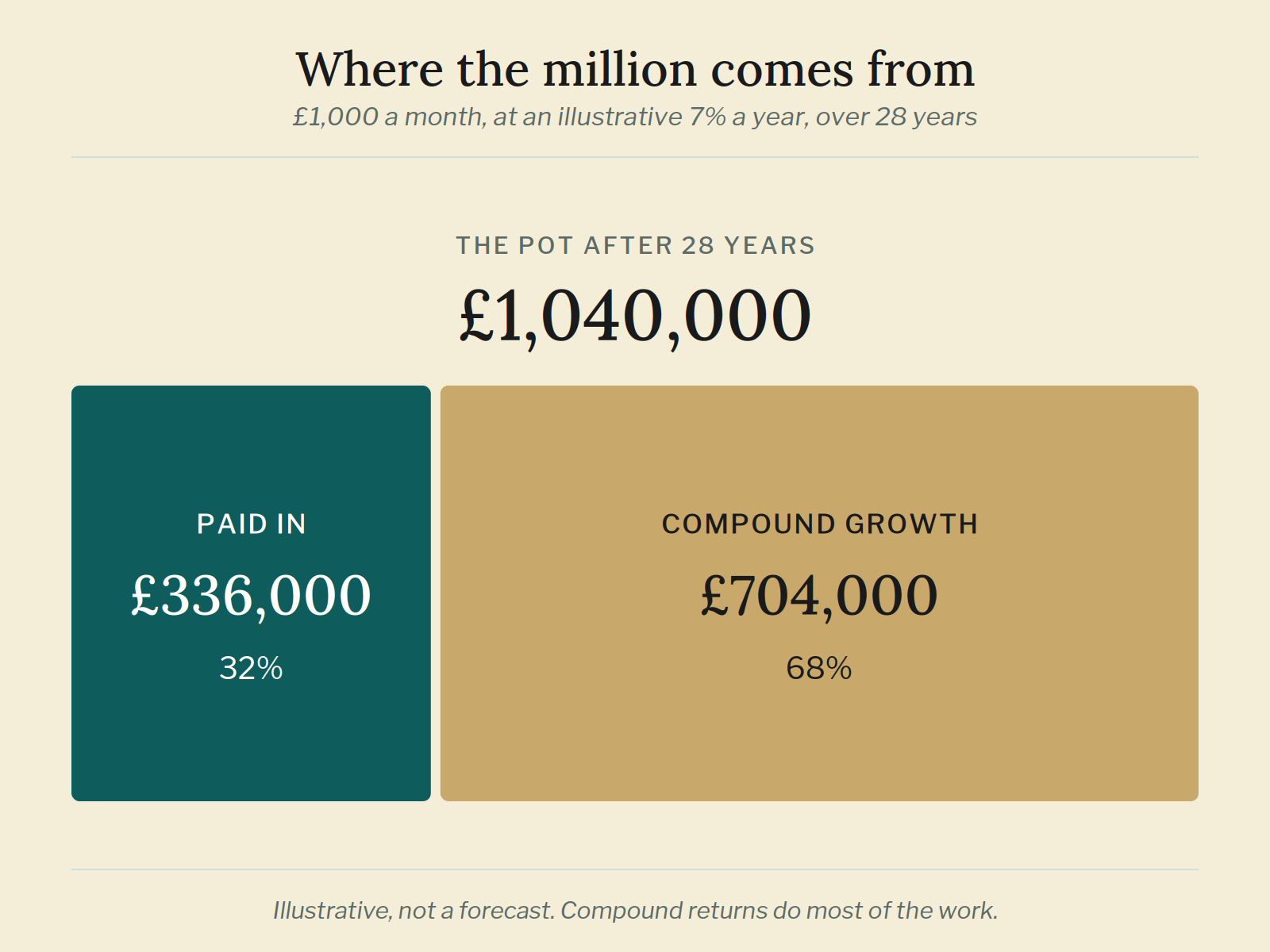
Take the £1,000-a-month path. Over about 28 years you’d pay in roughly £336,000. The pot passes £1 million. The gap, more than £700,000, is compound growth: returns earning returns, year after year, on a balance that keeps getting bigger. Your contributions are the smaller part of the finished million.
That’s why starting is worth more than optimising. The early years feel slow because the balance is small and growth has little to work on. The late years do the damage, in the good sense, because growth is now compounding on a large pot. Most of the distance to a million is covered in the final stretch, which you only reach by starting the clock early and leaving it running. There’s more on the mechanism in the maths that changes everything.
The levers you actually control
You can’t control the return the market delivers. You can control four things that decide whether you get near a million, and they matter roughly in this order.
How much you put in.
Contributions are the lever you feel every month, and early on they’re almost the whole story. Getting from £250 to £500 a month knocks about a decade off the timeline above. This is why your savings rate matters more than your returns for most of the journey.
How long you stay invested.
Time is the one lever you can’t buy back later. A pound invested at 30 has decades to compound; the same pound at 50 has far fewer. Starting is the single highest-value move, and it beats waiting until you can invest a bigger amount.
What you pay to invest.
Costs run in the opposite direction to compounding, shrinking the pot a little every year. On a journey this long, a percentage point of fees is worth tens of thousands at the end, which is the whole argument in why fees decide your returns.
Whether you stay the course.
The maths only works if you leave it alone through the falls as well as the rises. Selling in a downturn locks in the loss and forfeits the recovery, and it’s the most common way people talk themselves out of the finish line. That’s the behaviour gap, and closing it is worth more than any fund pick.
And the wrapper itself does real work here: inside an ISA there’s no tax on the growth, the dividends or the interest, so nothing is skimmed off the compounding along the way. Over decades that shelter is a meaningful part of why the number gets to seven figures at all.
A word on what a million will be worth.
A million in thirty years won’t buy what a million buys today; inflation sees to that. So treat the figure as a marker, not a magic finish line. The habits that get you toward it, investing steadily, keeping costs low, leaving it alone, are what actually matter, whatever the number turns out to be.
If you’d like the whole path laid out in one place, from opening an account to the long game, that’s what my book is for. And if you just want the essentials as a short, jargon-free guide, The ISA Starter covers them in about ten minutes.
How long does it take to become an ISA millionaire?
At an illustrative 7% a year: about 22 years maxing the £20,000 allowance, about 28 years at £1,000 a month, about 36 years at £500 a month. Lower returns stretch those out. It’s a long game, and the earlier you start the shorter it gets.
How much do I need to invest each month to reach £1 million?
There’s no single figure, it trades off against time. Roughly £1,000 a month over about 28 years, or the full allowance over about 22 years, at an illustrative 7%. Smaller amounts still get there, they just take longer.
Is £1 million in an ISA realistic?
Yes, over a long enough horizon and with steady contributions, because compound growth does most of the work. It’s realistic, not quick, and it depends on returns nobody can guarantee.
Do I have to max my ISA every year to get there?
No. Maxing the allowance is the fast route, but far smaller monthly amounts reach a million given more time. Consistency over years matters more than any single big year.
Will £1 million still be worth £1 million by the time I get there?
No, inflation means it’ll buy less than it does today. Treat the number as a target to aim past, and focus on the habits rather than the headline figure.
Key takeaways
All figures are correct at the time of writing and can change, so always check gov.uk for the current numbers. The value of investments can go up and down, and you can get back less than you put in. This is general information, not financial advice. If you are unsure, speak to a regulated financial adviser.