

Why Savings Rate Matters More Than Returns
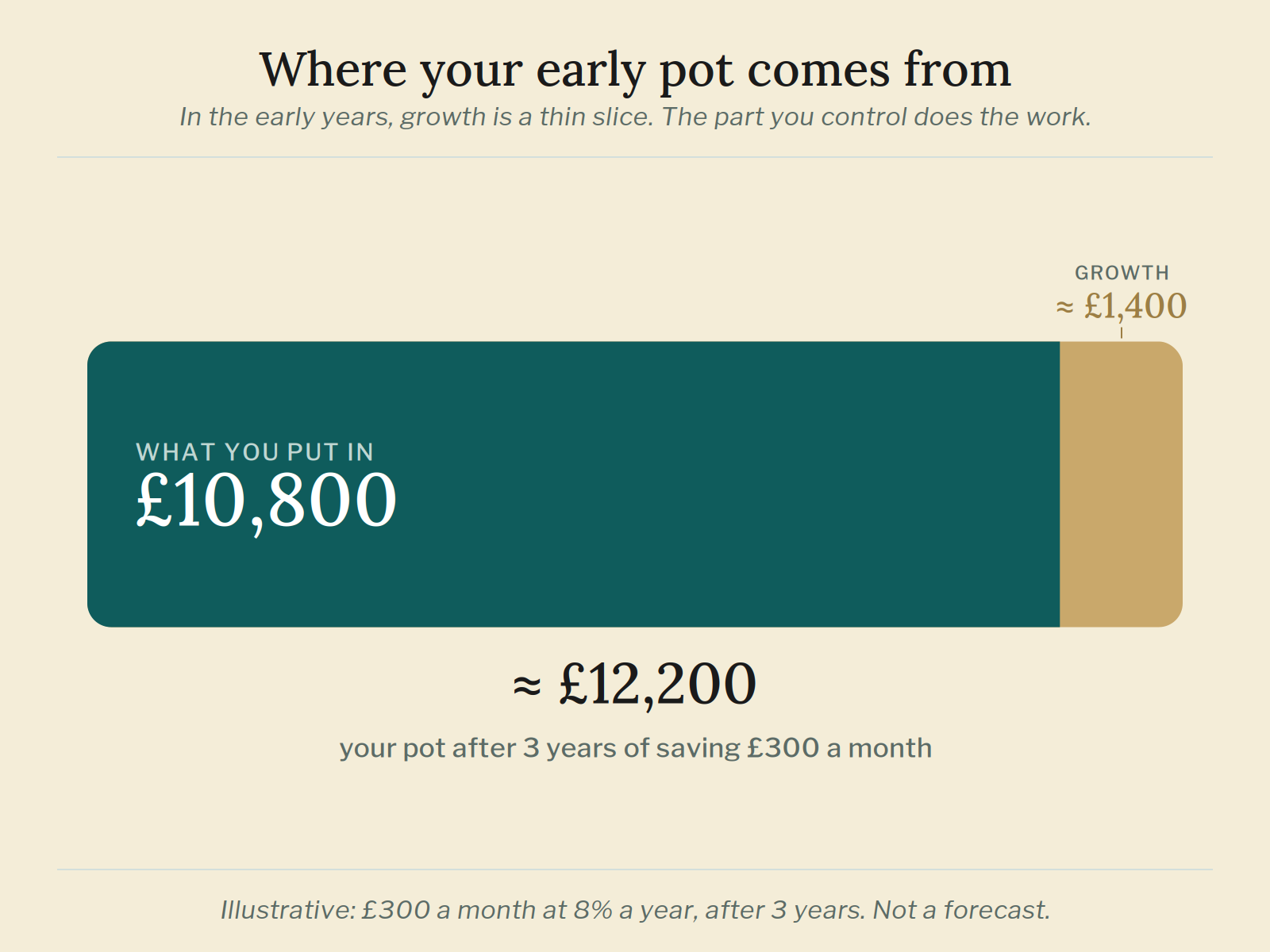
In the first decade of investing, how much you put in matters far more than the return you earn, because on a small pot even a good year adds little. Your savings rate, the share of your income you invest, is the one number you fully control. Returns are out of your hands.
Everyone obsesses over returns. Which fund, which share, which clever strategy will squeeze out an extra 1% or 2%. Almost nobody obsesses over the one number that matters far more in the early years and that they completely control: how much they actually put in.
Why contributions win early on
When your pot is small, even a brilliant return is a small amount of money. A great year on a few thousand pounds adds a little. Putting in more, on the other hand, adds real money straight away. Early on, the contribution beats the cleverness, and it is not close.
A quick way to feel it. An extra 2% return on a £5,000 pot is £100 over a year. An extra £100 a month paid in is £1,200 over the same year. In the early years, the saver who simply puts more in runs rings around the one chasing a slightly better return. Those figures are just to show the shape of it, not a forecast.
Control what you can control
You cannot control the markets. You cannot control what returns you will get, or when the falls will come. You can control how much you put in, how consistently you do it, and whether you stay invested when it gets uncomfortable. It makes no sense to pour your energy into the parts you cannot influence while ignoring the part you fully command. Focus on the controllables.
Pay yourself first
The oldest trick for lifting your savings rate is also the simplest, and it is thousands of years old. Clason’s The Richest Man in Babylon called it paying yourself first: set aside a part of what you earn before life has a chance to spend it. The modern version is a direct debit into your ISA on payday, before the money is ever in reach. Automate it, and saving stops being a monthly act of willpower and becomes something that just happens.
When returns finally take over
Returns are not unimportant, they just take their turn later. Once the pot has grown large, after years of steady contributions, returns start to dominate, because a given percentage is now being applied to a big number. But you only get to ‘large’ by contributing consistently first. So the order is clear: in the early years, focus on putting money in. Let compounding take the wheel once the pot is big enough to drive.
A sustainable rate beats a heroic one
None of this calls for heroic, miserable frugality. A savings rate you can actually hold for years beats an ambitious one you abandon after three months. The best rate is not the highest number on a spreadsheet. It is the one you will still be sticking to a decade from now.
Does the return not matter then?
It matters, but mostly later. In the early years, when the pot is small, your contributions drive your results far more than returns do.
What savings rate should I aim for?
Whatever you can sustain consistently. There is no single right number, and a steady rate you keep up beats a heroic one you give up on. This is not advice on a specific figure.
How do I actually make myself save?
Pay yourself first. Set up an automatic transfer into your ISA on payday so the money moves before you can spend it.
When do returns start to matter most?
Once the pot is large, years in, a given percentage return is applied to a big balance, and growth begins to outweigh new contributions.
Key takeaways
All figures are correct at the time of writing and can change, so always check gov.uk for the current numbers. The value of investments can go up and down, and you can get back less than you put in. This is general information, not financial advice. If you are unsure, speak to a regulated financial adviser.