

Can You Have More Than One ISA? The Rules, Type by Type
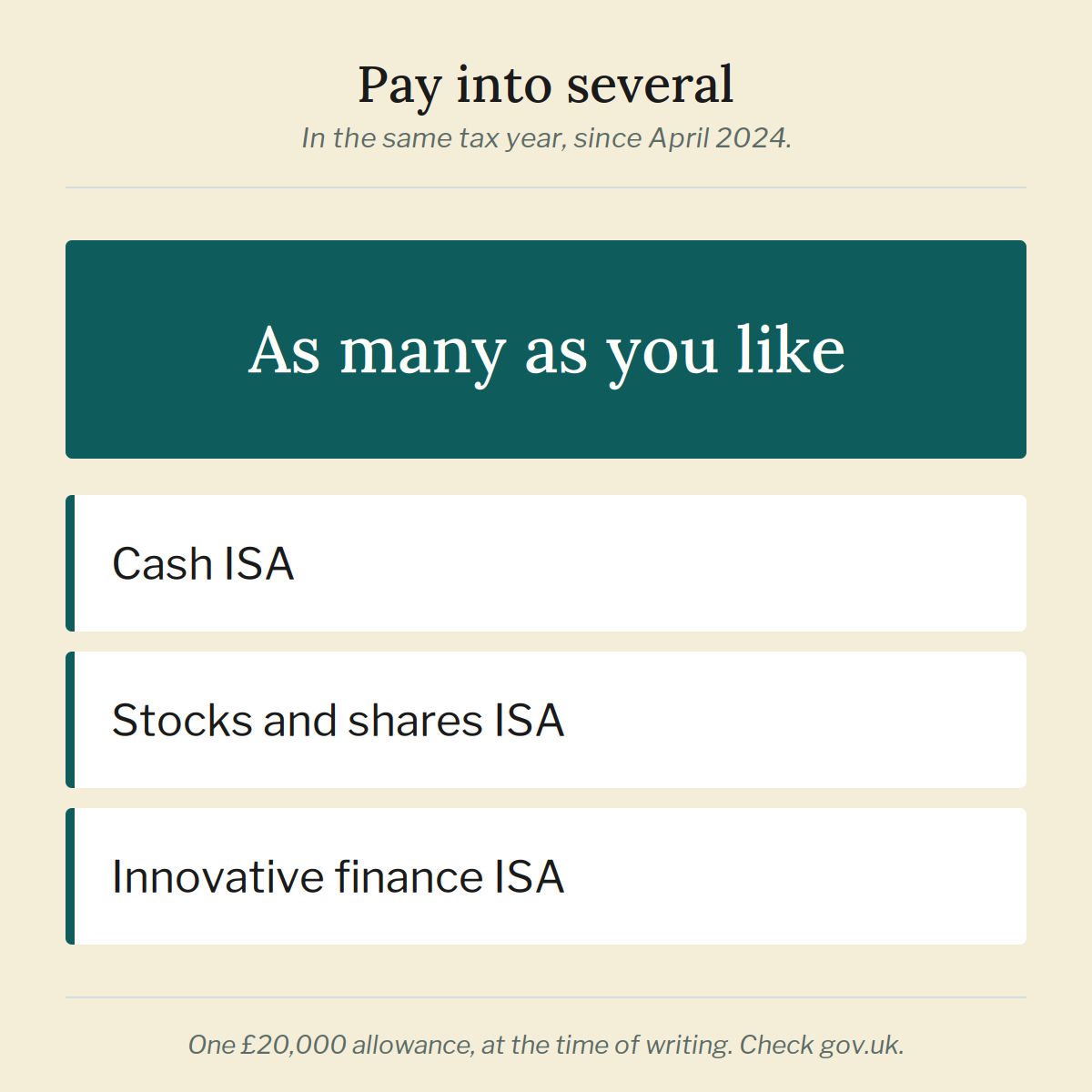
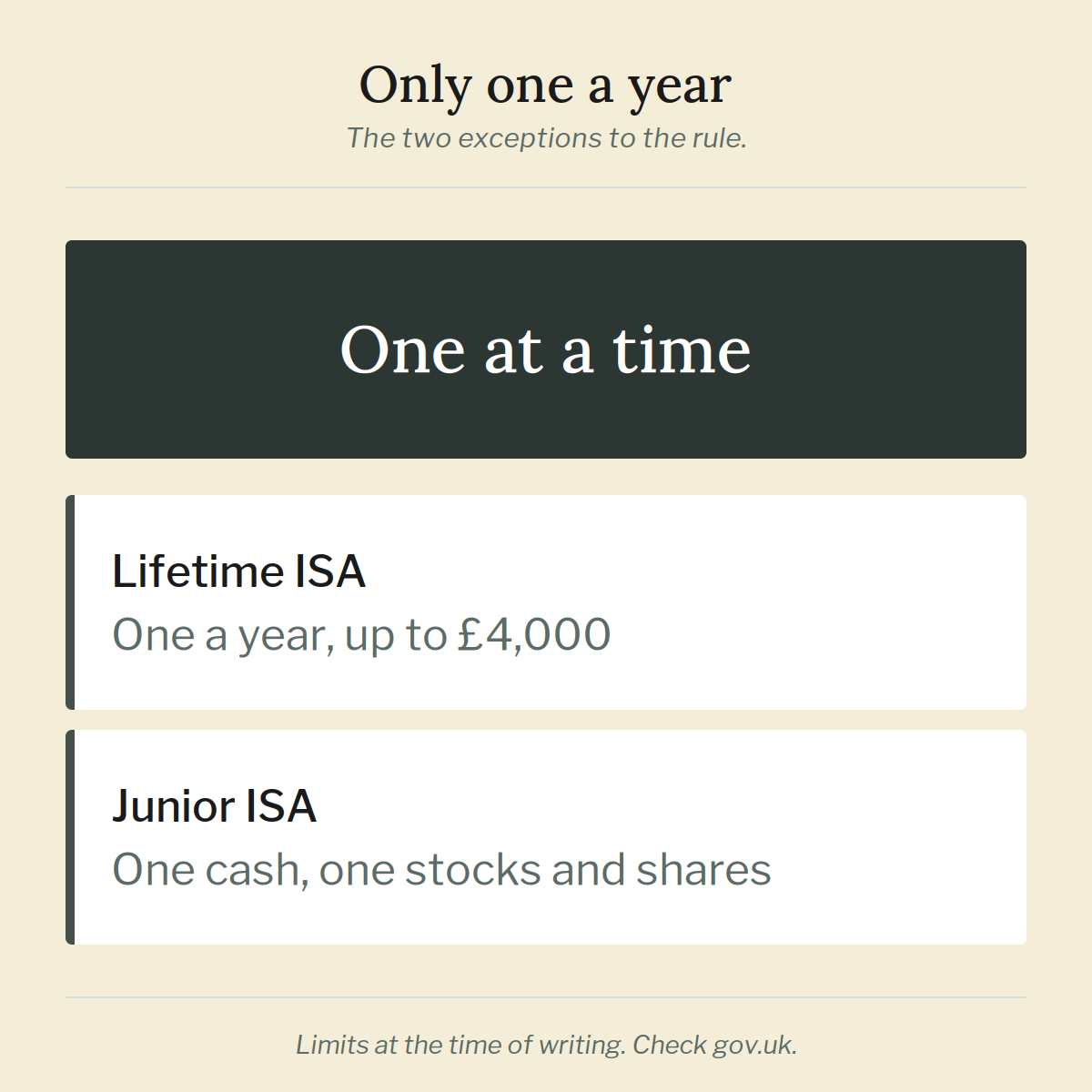
Yes. There’s no limit on how many ISAs you can have, and since April 2024 you can pay into more than one of the same type in the same tax year, so two cash ISAs or two stocks and shares ISAs is fine. The limit is on the money, not the accounts: everything you pay in across all of them shares one £20,000 allowance, at the time of writing. There are two exceptions. You can only pay into one Lifetime ISA a year, and a child can have one cash Junior ISA and one stocks and shares Junior ISA, no more.
Which ISAs you can have more than one of
| ISA type | Can you hold more than one? | Pay into more than one in a tax year? | Yearly limit |
|---|---|---|---|
| Cash ISA | Yes | Yes | Up to £20,000. From 6 April 2027, £12,000 in total for under-65s |
| Stocks and shares ISA | Yes | Yes | Up to £20,000 |
| Innovative finance ISA | Yes | Yes | Up to £20,000 |
| Lifetime ISA | Yes | No, only one | £4,000, counted inside the £20,000 |
| Junior ISA (for a child) | One cash and one stocks and shares | One of each type | £9,000 per child, separate from yours |
Figures are for the 2026 to 2027 tax year, at the time of writing, and can change, so check gov.uk for the current numbers.
How paying into several ISAs works
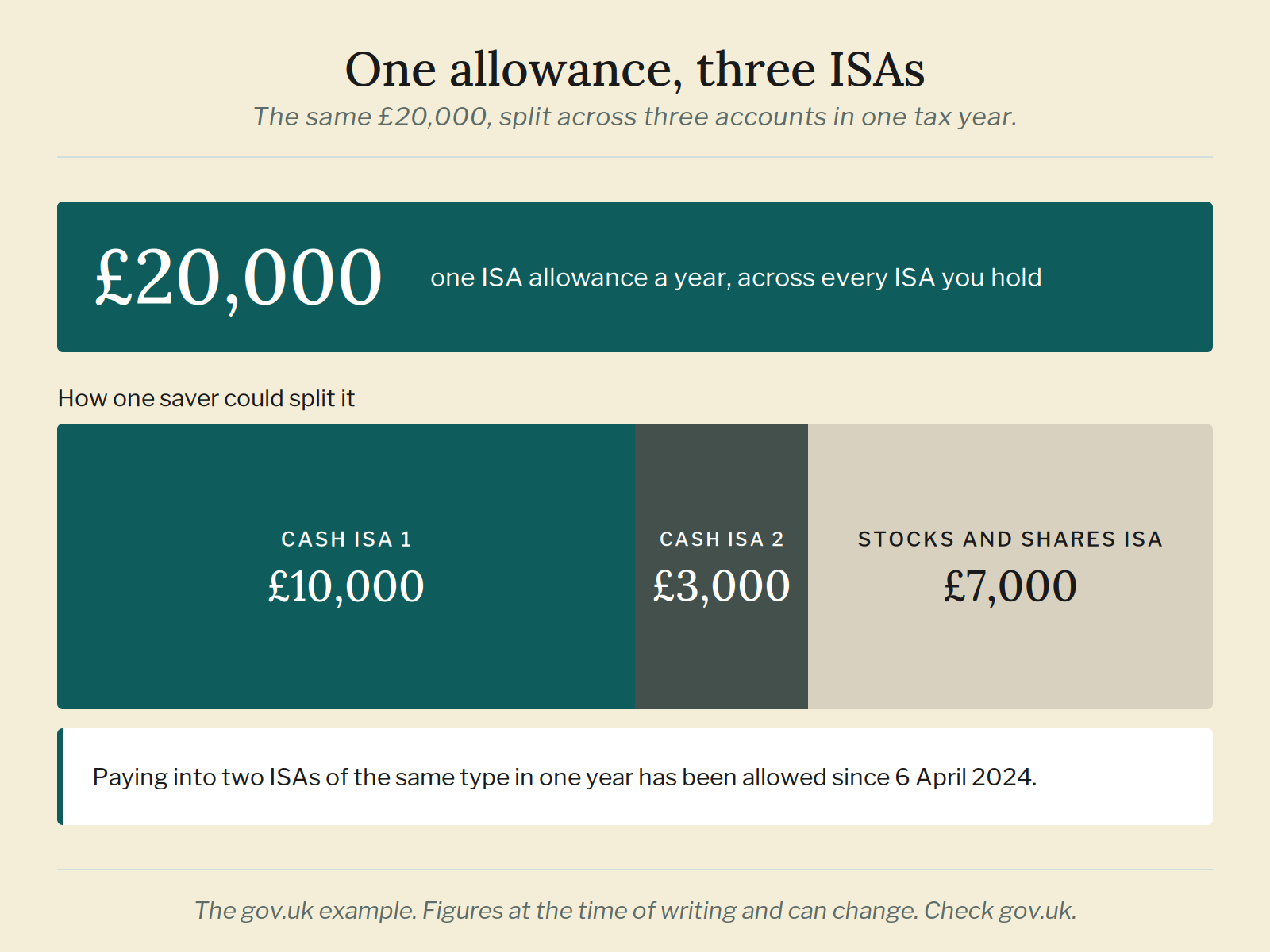
Think of the allowance as one pot of room each tax year, from 6 April to 5 April. You can put it all into one account or spread it across as many as you like. The government’s own example is £10,000 in one cash ISA, £3,000 in a second cash ISA and £7,000 in a stocks and shares ISA, all in the same year. That’s the full £20,000, used across three accounts. How the ISA allowance works covers the rest of the rules around it, and the allowance calculator shows how much of this year’s you have left.
What changed in April 2024
Before 6 April 2024 you could only pay into one ISA of each type in a tax year. Open a cash ISA with one bank in May, spot a better rate elsewhere in June, and you had to wait until the next April or move the whole account. That rule has gone. You can now open a new ISA of the same type whenever a better one comes along, and keep paying into the old one too.
Your old ISAs stay open
An ISA doesn’t close when the tax year ends. Every one you’ve opened keeps its tax-free status for as long as the money stays in, whether or not you pay anything more into it. Lots of people have three or four sitting with different providers from different years, and that’s allowed.
Keeping count is your job, not your provider’s
Each provider only sees what you pay in with them. None of them checks what you’ve put in elsewhere, so if you’re paying into ISAs with two or three different firms, you’re the one who has to keep the total under £20,000. Go over, and the extra, plus anything it earned, has to come out of the ISA.
The Lifetime ISA: one a year
You can pay into only one Lifetime ISA in each tax year, up to £4,000, and that £4,000 counts towards your £20,000, not on top of it. You can hold more than one if you opened them in different years, but only one can take new money each year. The Lifetime ISA is also due to be replaced by a First-Time Buyer ISA, with no start date set yet, so check gov.uk before opening a second.
The Junior ISA: one of each type
A child can have a cash Junior ISA, a stocks and shares one, or both, but not two of the same type. The £9,000 yearly limit belongs to the child, separate from your own £20,000, and it’s shared across both accounts.
Should you have more than one ISA?
Being allowed to and needing to aren’t the same thing. For most people, two is the useful number: a cash ISA for money you’ll need in the next few years, and a stocks and shares ISA for money you won’t touch for five or more. They do different jobs, and holding both is often the whole point. I compare the two properly in cash ISA vs stocks and shares ISA.
Beyond that, an extra account earns its place only when it does something the first one can’t. A second cash ISA can make sense when another bank pays a better rate and your first one is a fixed-term deal you can’t add to. A second stocks and shares ISA can make sense when you want a fund your current platform doesn’t offer.
The case against spreading too thin
Every platform charges its own fees, and some have a minimum charge whatever the balance, so four small accounts can cost more than one larger one. It’s a big part of why fees decide your returns. More accounts also means more logins, more statements and more chance of losing track of an old one. If your ISAs have multiplied over the years, you can bring them together with a proper ISA transfer, which moves the money without using any of this year’s allowance.
What changes in April 2027
From 6 April 2027, if you’re under 65, you’ll be able to put no more than £12,000 of your £20,000 into cash ISAs. That’s a total across all your cash ISAs, so opening a second one won’t get round it. The same rules bring in a 22% charge on interest paid on cash held in a stocks and shares ISA, and stop under-65s transferring from a stocks and shares ISA into a cash ISA. Over-65s keep the full £20,000 for cash. The regulations were laid before Parliament on 14 September 2026, at the time of writing, so check gov.uk for the latest.
If you’re opening your first ISA, my free ISA Starter guide walks you through it step by step, and the book sets out how I use the allowance year after year.
Can I have a cash ISA and a stocks and shares ISA?
Yes, and you can pay into both in the same tax year, as long as the total stays within £20,000. Many people do exactly that.
Can I have two cash ISAs?
Yes. Since April 2024 you can pay into two or more cash ISAs in the same tax year, with the same provider or different ones. From April 2027, under-65s can put no more than £12,000 a year into cash ISAs in total.
Can I have more than one Lifetime ISA?
You can hold more than one, but you can only pay into one in each tax year, up to £4,000.
Can I have a cash ISA and a Lifetime ISA?
Yes. The Lifetime ISA’s £4,000 counts inside your £20,000, so paying in the full £4,000 leaves £16,000 for your other ISAs that year. Each type does a different job, which I set out in the ISA family explained.
Is there a limit on how many ISAs I can hold?
No. The limit is on what you pay in each year, not on the number of accounts.
Can I have a joint ISA?
No. An ISA is always in one person’s name. A couple has two allowances, so up to £40,000 a year between them.
What if I pay in more than £20,000 by mistake?
Tell your provider. The extra, and anything it earned, has to come out of the ISA. If HMRC spots it first, it’ll contact you.
Key takeaways
All figures are correct at the time of writing and can change, so always check gov.uk for the current numbers. The value of investments can go up and down, and you can get back less than you put in. This is general information, not financial advice. If you are unsure, speak to a regulated financial adviser.