

Autumn Budget 2026: What It Means for Your ISA
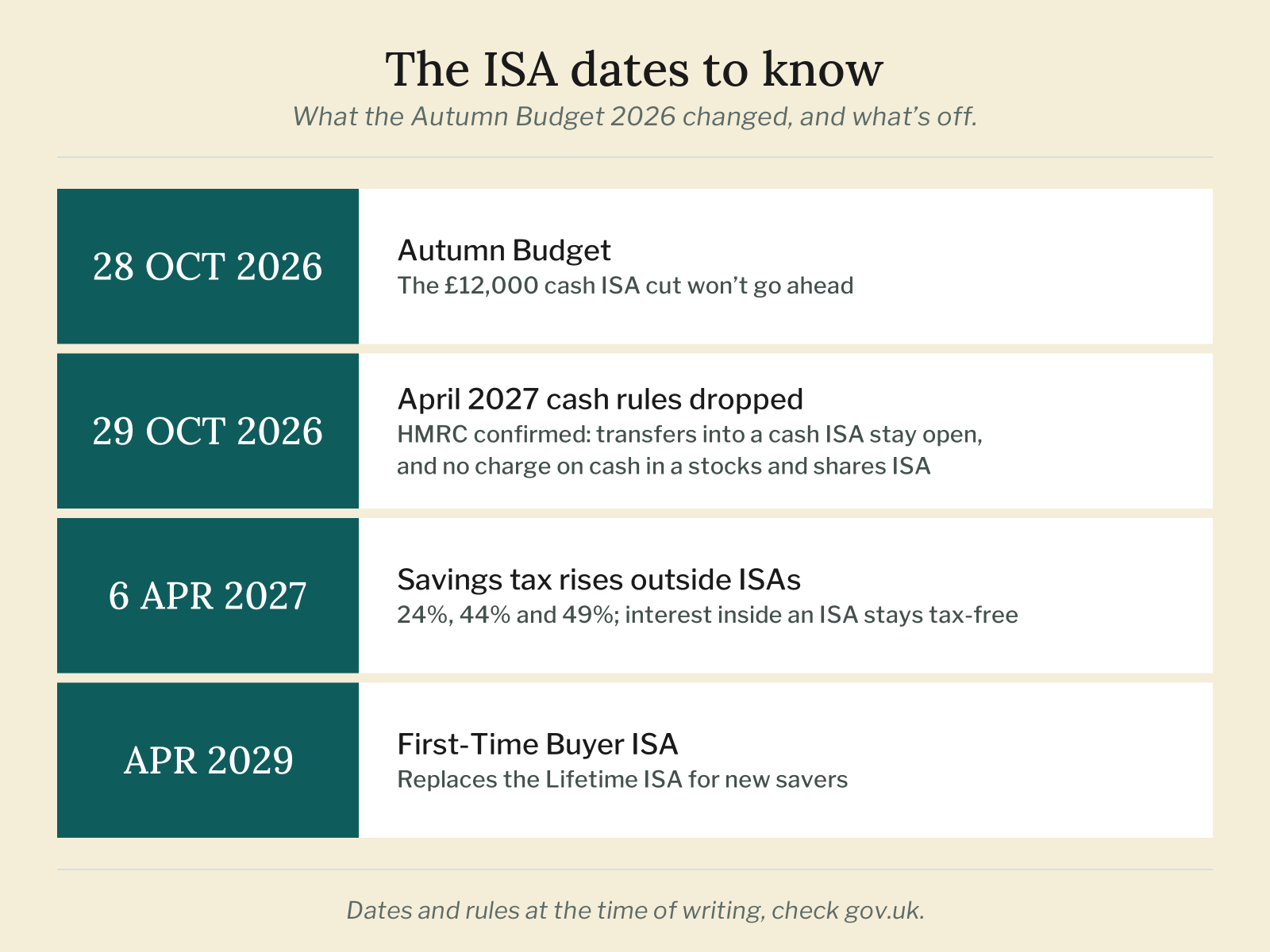
The Autumn Budget on 28 October 2026 kept the cash ISA limit at £20,000 for all savers over 18, so the planned cut to £12,000 from April 2027 won’t go ahead. The overall £20,000 allowance stays, and interest inside an ISA stays tax-free while tax on savings interest outside one rises from April 2027. The other April 2027 rules are off too: on 29 October 2026 HMRC confirmed that the transfer ban and the charge on cash in a stocks and shares ISA won’t take effect.
What the Budget means for ISAs
| Change | When | Where it stands |
|---|---|---|
| Overall ISA allowance stays at £20,000 | Now | Confirmed |
| Cash ISA limit stays at £20,000 for all savers over 18; the £12,000 cut won’t go ahead | April 2027 | Confirmed; the regulations revoking the cut were made on 18 November 2026 (SI 2026/1218) and take effect on 6 April 2027 |
| Tax on savings interest outside an ISA rises to 24%, 44% and 49% | 6 April 2027 | Announced |
| Lifetime ISA charge on a first home above £450,000 falls from 25% to 20% | From 29 October 2026 | Announced; legislation laid 28 October 2026 |
| First Time Buyer ISA launches; the Lifetime ISA is planned to close to new savers | April 2029 | Announced |
| No transfers from a stocks and shares ISA into a cash ISA, a charge on interest from cash in a stocks and shares ISA, and the money market fund rule | Was due 6 April 2027 | Won’t take effect (HMRC, 29 October 2026) |
All at the time of writing, from Budget 2026 and Budget 2026: Overview of Tax Legislation and Rates on gov.uk, and HMRC’s tax-free savings newsletter 24. Check there for the current position.
What did the Budget change for ISAs?
The biggest change is the one that didn’t happen. The November 2025 Budget set a £12,000 cash ISA limit for under-65s from April 2027, and this Budget reversed it. The cash limit stays at £20,000 for all savers over 18. The regulations that make this law were made on 18 November 2026 (SI 2026/1218) and take effect on 6 April 2027, at the time of writing. The government also says it will explore a new incentive for people putting money into a stocks and shares ISA for the first time, designed with the industry. There are no details or dates yet.
Outside an ISA, savings get more expensive. From 6 April 2027, tax on savings interest above your allowances rises to 24% for basic-rate, 44% for higher-rate and 49% for additional-rate taxpayers. That’s 2 percentage points more than the rates announced last year. Interest inside an ISA stays tax-free, so the gap between saving inside and outside the wrapper widens, as I set out in do you pay tax on an ISA.
For first-time buyers, two things moved. From 29 October 2026, the Lifetime ISA withdrawal charge for buying a first home above the £450,000 price cap falls from 25% to 20%; other early withdrawals still carry 25%. And the First Time Buyer ISA now has a date and a design: it launches in April 2029, with up to £4,000 a year and a 25% government bonus, worked out on the final balance and capped at £20,000, towards a first home worth up to £450,000. The Lifetime ISA is planned to close to new savers when the First Time Buyer ISA launches in April 2029, at the time of writing, and existing holders can keep paying in under the current rules. I set out what the government has decided.
What happened to the other April 2027 rules?
Two rules were set in regulations made in September 2026 to start on 6 April 2027: no transfers from a stocks and shares ISA into a cash ISA for under-65s, and a charge on interest from cash held in a stocks and shares ISA. The same regulations said a stocks and shares ISA couldn’t be held entirely in money market funds. On 29 October 2026, the day after the Budget, HMRC confirmed that the rules made alongside the cash ISA cut won’t take effect, and that the regulations that set them would be revoked. The revoking regulations were made on 18 November 2026 (SI 2026/1218) and take effect on 6 April 2027, at the time of writing. So you can still move money from a stocks and shares ISA into a cash ISA, interest on cash held in a stocks and shares ISA stays tax-free, and the money market fund rule goes too. I explain what the charge would have done in the 22% charge on cash in your stocks and shares ISA.
The allowance itself works as before, as set out in how the ISA allowance works. If you’re weighing cash against investing, cash ISA vs stocks and shares ISA sets out the difference. The monthly newsletter covers each change as it’s confirmed, and signing up gets you my free ISA Starter guide. The whole method sits in the book.
When was the Autumn Budget 2026?
Wednesday 28 October 2026.
Is the £20,000 ISA allowance changing?
No. The overall limit stays at £20,000 a year.
Is the cash ISA limit still being cut to £12,000?
No. The Budget kept it at £20,000 for all savers over 18, and the regulations that revoke the cut were made on 18 November 2026 (SI 2026/1218) and take effect on 6 April 2027, at the time of writing.
Is the Lifetime ISA closing?
It is planned to close to new savers when the First Time Buyer ISA launches in April 2029, at the time of writing. Existing holders can keep paying in under the current rules.
Has the charge on cash in a stocks and shares ISA been scrapped?
Yes. HMRC confirmed on 29 October 2026 that it won’t take effect, along with the ban on transferring from a stocks and shares ISA into a cash ISA.
Where can I read what the Budget changed?
On gov.uk, in Budget 2026 and the Overview of Tax Legislation and Rates.
Key takeaways
All figures are correct at the time of writing and can change, so always check gov.uk for the current numbers. The value of investments can go up and down, and you can get back less than you put in. This is general information, not financial advice. If you are unsure, speak to a regulated financial adviser.