

Thinking in Years and Decades, Not Days and Weeks
The market hands you a new number every second it is open. Almost none of those numbers are information. The trouble is that they feel like information, and that feeling is expensive.
Inside a Stocks and Shares ISA, an Individual Savings Account, you own small pieces of real companies. Shares pay returns, not interest, and those returns compound: the growth you earn goes on to earn growth of its own. Compounding needs one input above all others, and it is not cleverness. It is time.
Here is why the horizon you measure by matters more than almost anything else you will choose.
The screen is not the investment
A share price is not a measurement of a business. It is the price at which the last person to lose their nerve, or find it, agreed to trade. When you check a price you learn what other people felt this morning, not what the company is worth.
Prices move faster than the businesses behind them
A company signs contracts, hires people and wins customers over years. Its share price reprices every few seconds. Most of that movement is other investors changing their minds about the same unchanged facts, which is why a day of it tells you almost nothing.
Why watching often makes you poorer
Watching does not change the price. It changes you. Every check is an invitation to act, and acting is usually where the damage happens: selling into a fall, buying after a rise, swapping a plan for a feeling. That is the behaviour gap, the difference between what investments returned and what investors actually earned. The cheapest way to close it is to look less often.
What you control, and what you do not
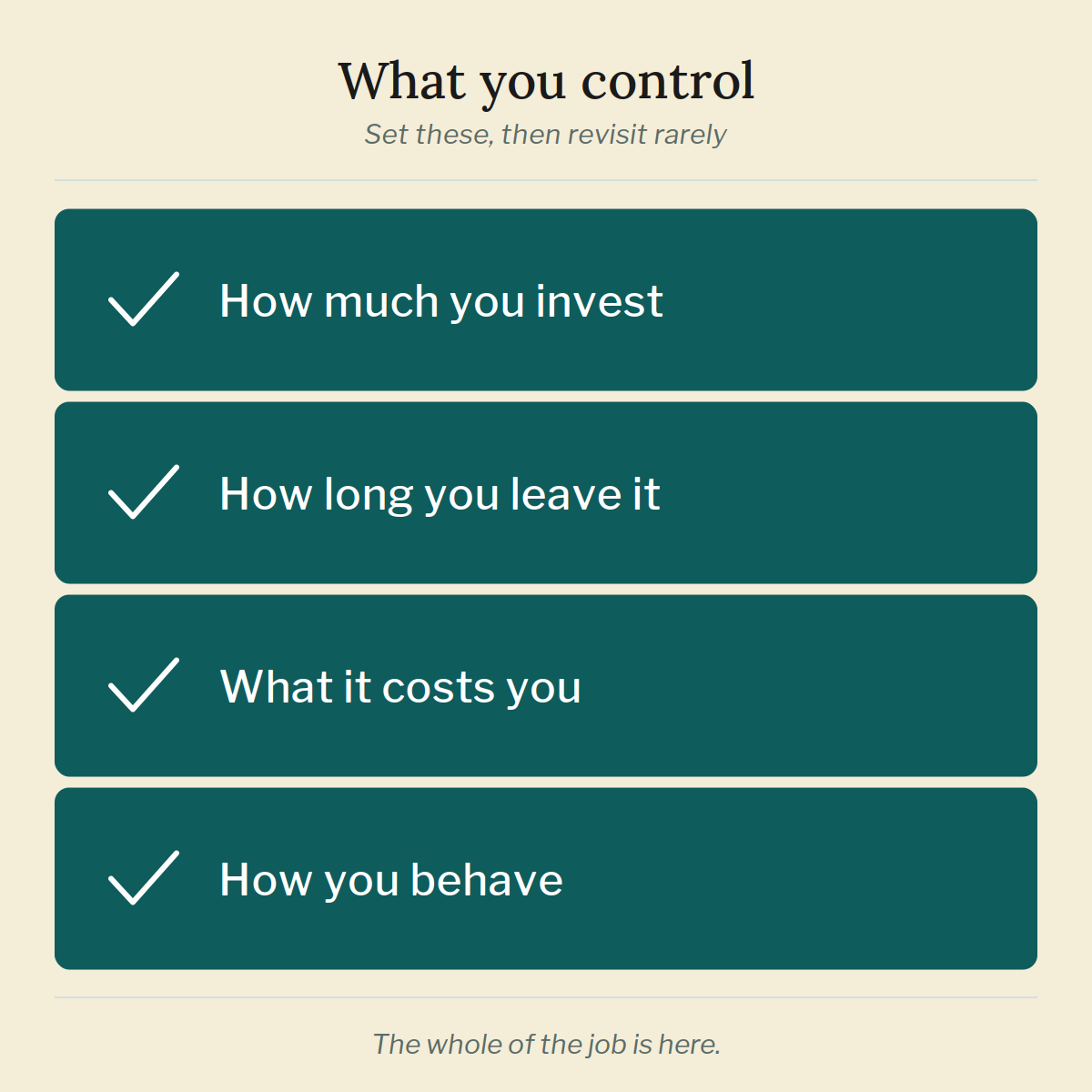
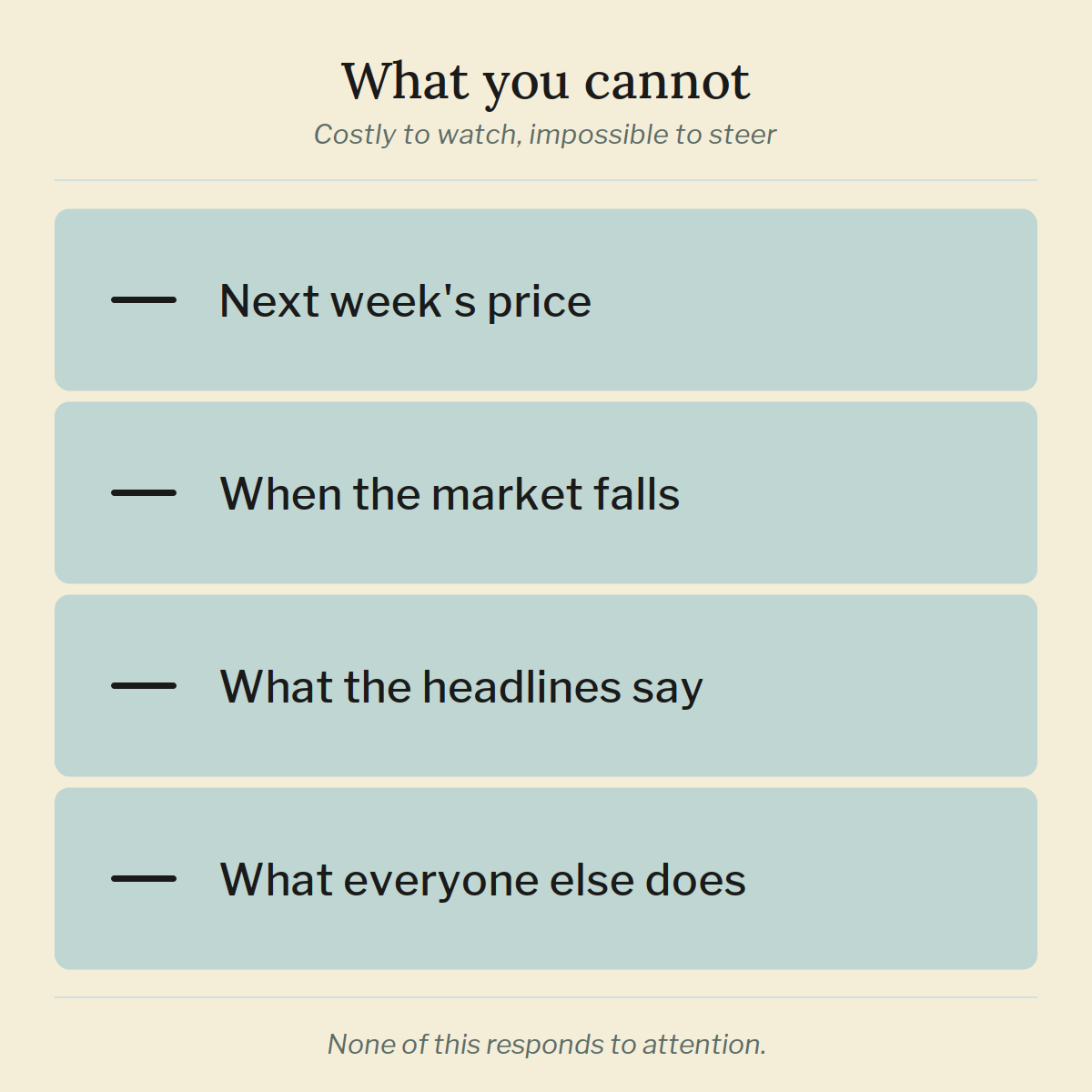
Almost everything that fills a screen is outside your control, and almost everything that decides your outcome is inside it. Sorting the two is most of the job.
The decade is the unit of measurement
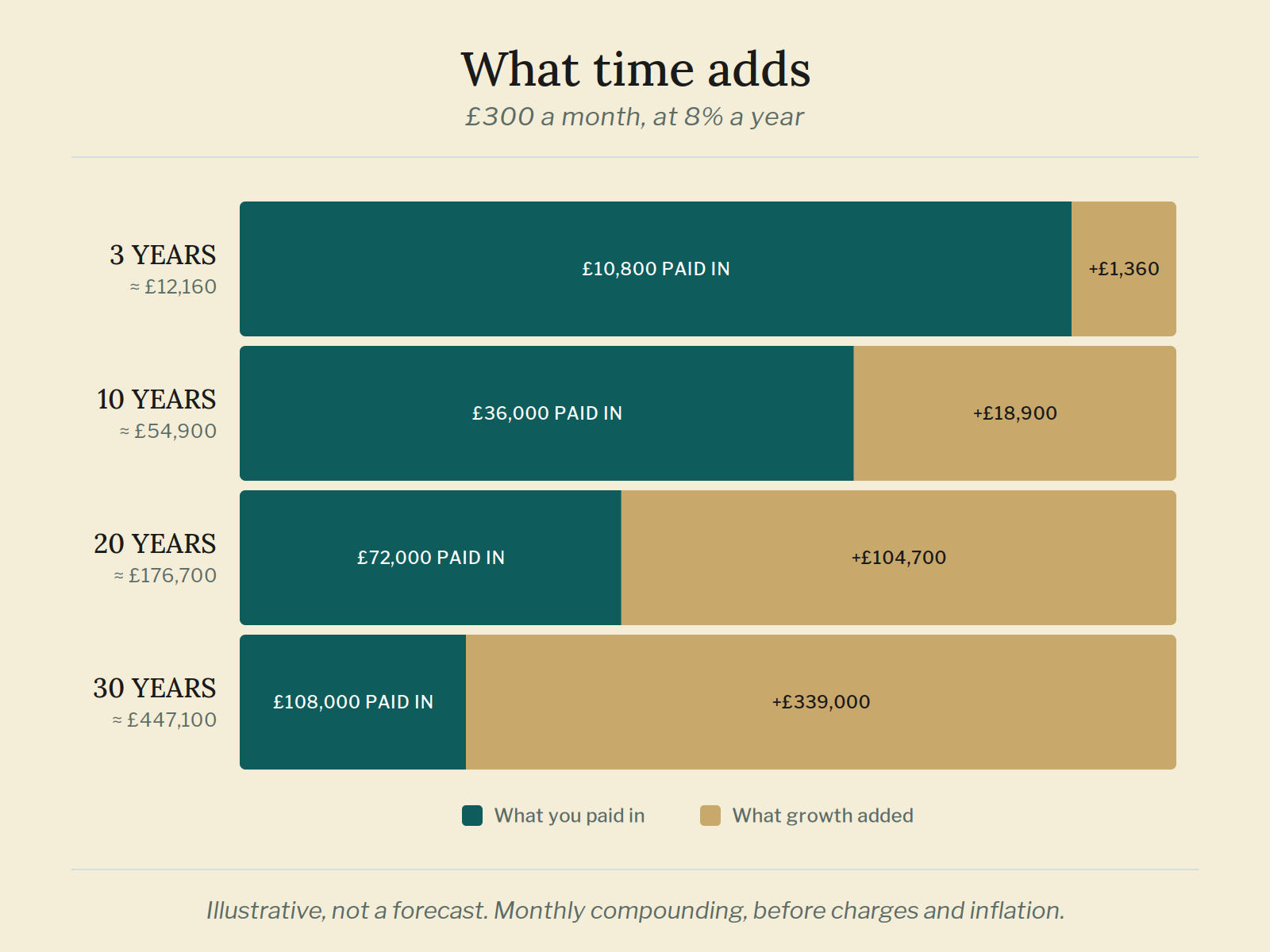
Look at what changes as the horizon lengthens. At three years, almost everything in the pot is money you paid in. At thirty years, most of it is growth. The money is the same money. The only difference is how long it was left alone.
The same money, left alone for longer
The figures below are illustrative, not a forecast, and they ignore charges and inflation. The shape is the point: patience is not a personality trait here, it is a mechanism. There is more on how that works in the maths that changes everything.
What does this look like in practice?
Choose a horizon before you invest a pound, and make it years, not weeks. Decide in advance what would make you sell, and be honest that a falling price is not on that list. Check rarely, contribute regularly, and let the boring part happen.
How often should I check my ISA?
There is no correct number. Once a quarter is plenty for most long-term investors, and once a year is not negligent.
Does a long horizon make investing safe?
No. It gives compound returns room to work, but the value of investments can fall as well as rise, and you can get back less than you put in.
What if I need the money in a few years?
Then a long horizon is not available to you, and money you need soon is generally not money to invest.
Does a crash ruin the plan?
Falls are part of the process, not a failure of it. What ruins plans is selling into them.
Key takeaways
All figures are correct at the time of writing and can change, so always check gov.uk for the current numbers. The value of investments can go up and down, and you can get back less than you put in. This is general information, not financial advice. If you are unsure, speak to a regulated financial adviser.