

What Financial Independence Actually Means
Financial independence does not mean a yacht, retirement at 35, or never working again. For most people it means something quieter and far more useful: reaching the point where work becomes a choice rather than an obligation.
Here is what it actually means. It is the point at which the income from what you own covers the life you want, so that carrying on working, changing direction, or stepping back all become decisions you get to make. It is about options, not luxury. Freedom, not status.
A working definition
Strip away the noise and financial independence is simple to define. It is the point where your assets, your ISA and any other investments, produce enough to cover your needs, so that employment income is no longer the only thing keeping the lights on. You may well keep working. The difference is that you are doing it because you want to, not because you cannot afford not to.
Work while you build, build so you do not have to
This is the heart of it, and it is not complicated. The day job funds your life now and feeds the pot. The pot, growing quietly alongside the job slowly becomes a second source of income. Over time it grows large enough to give you real choices about how, where and whether you work. You are not working against your job. You are using it to build the thing that eventually sets the terms.
Your number starts with your spending
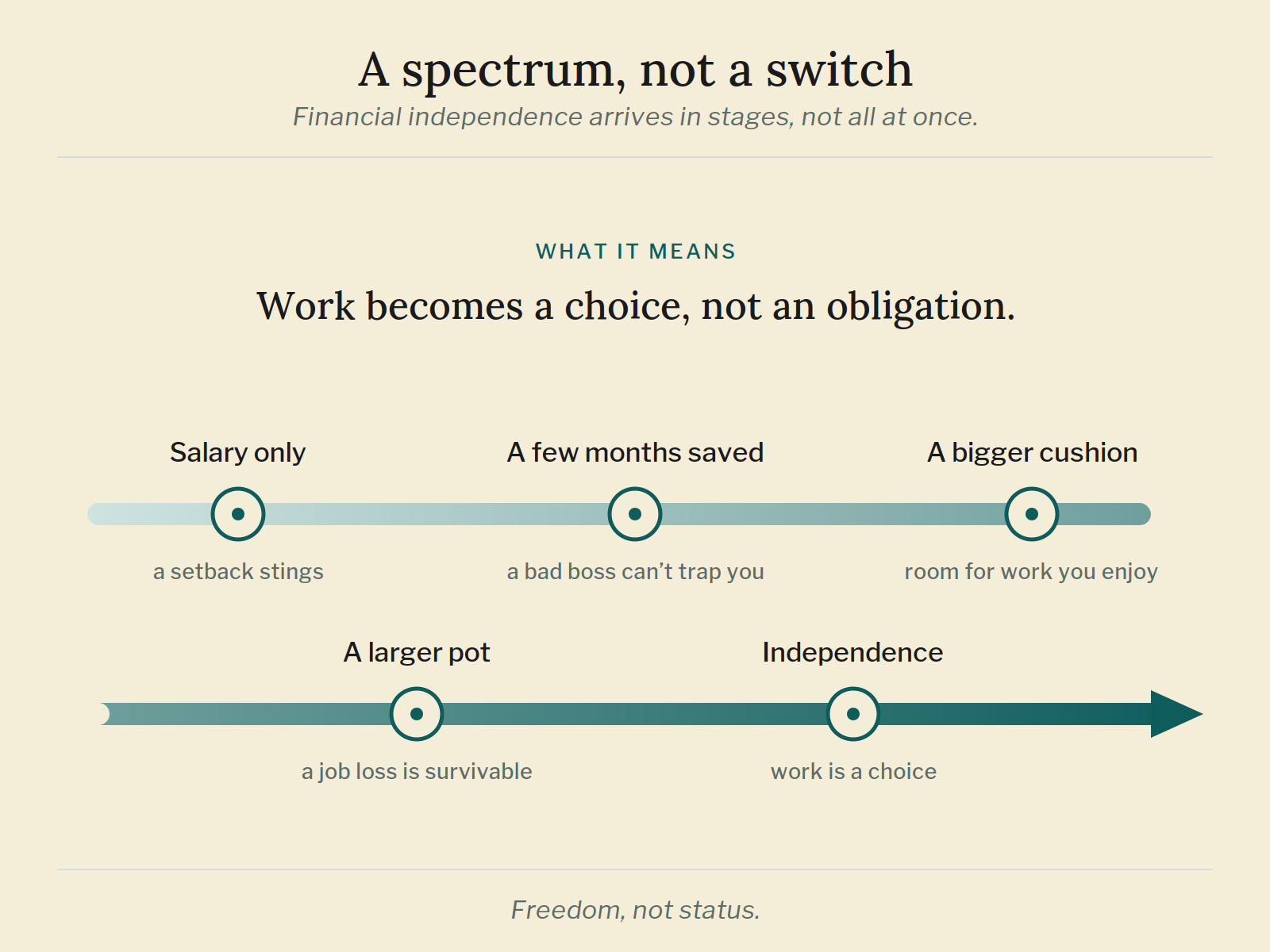
People imagine financial independence as a finish line you cross one day. In reality the useful part arrives long before the finish. A few months of expenses saved means a bad boss is no longer a trap. A bigger cushion means you could take a pay cut for work you actually like. A larger pot again means a job loss is an inconvenience rather than a crisis. Every step along the way buys you a little more freedom. The full destination is just the far end of a road you benefit from the moment you start walking it.
It is a spectrum, not a switch
People talk about their ‘number’, the size of pot that would cover their life. There is no magic figure, and I would be wary of anyone who handed you one, because it depends entirely on what your life actually costs. Working it out does not start with the pot. It starts with knowing your real, honest annual spending. Until you know what your life costs, the target is just guesswork.
This is not the extreme version
You may have come across the more aggressive, Americanised version of all this, all deprivation and quitting work at 35. That is not what I am describing. This is the calm UK version: not about extreme frugality or dropping out, but about quietly building optionality over years. Freedom, not status. The ability to choose, not a number to show off. It aligns in spirit with wanting your time back, without the preachiness.
Which ones actually matter for most people
The stocks and shares ISA is a natural engine for this, because it lets the pot grow tax-free over the long horizons financial independence needs. The levers are not glamorous, how much you put in, how consistently, and how long you leave it, but they are the levers that actually move the dial.
Does financial independence mean retiring early?
No. It means work becomes optional. Plenty of people who reach it keep working, just on their own terms.
How much do I need?
It depends entirely on what your life costs. There is no universal figure. The honest starting point is working out your real annual spending.
Is this the same as the FIRE movement (Financial Independence, Retire Early)?
Similar in spirit, but this is the calm, non-extreme UK version. Optionality and freedom, not deprivation or dropping out.
Can ordinary earners reach it?
It is built for working people over time. The main levers are your savings rate and the years you give it, not the size of your salary.
Key takeaways
All figures are correct at the time of writing and can change, so always check gov.uk for the current numbers. The value of investments can go up and down, and you can get back less than you put in. This is general information, not financial advice. If you are unsure, speak to a regulated financial adviser.